
Robotic Surgery in China: The 'High Volume' Advantage for Patient Safety

Key Takeaways
Experience Equals Safety: Chinese surgeons often perform 5x–10x the annual case volume of Western counterparts, leading to superior "muscle memory" and crisis management skills.
Better Outcomes: High-volume centers in China report significantly lower mortality rates (down to 1% for high-risk procedures) and faster operation times.
Cutting-Edge Tech: Beyond standard da Vinci systems, China is a leader in 5G telesurgery and domestic robotic innovation.
MedBridge Access: As a medical concierge, MedBridgeNZ connects international patients directly to these elite, high-volume surgical teams without language barriers.
Introduction: Why Experience Matters
When you board a plane, you likely hope your pilot has logged thousands of flight hours, not just a few dozen. The same logic applies critically to advanced medicine. In the realm of robotic surgery in China, the machine—whether a da Vinci system or a new domestic platform—is only as precise as the hands controlling it.
For patients facing complex procedures, such as radical prostatectomies or intricate thoracic surgeries, the most vital question isn't just which robot is being used, but how many times the surgeon has used it.
In this arena, China has emerged as a global leader in surgical volume. A top-tier Chinese surgeon’s annual case load can sometimes equal what a Western counterpart might accumulate over 5 to 10 years. Here is why choosing robotic surgery in China offers a distinct "High Volume" advantage for your recovery.
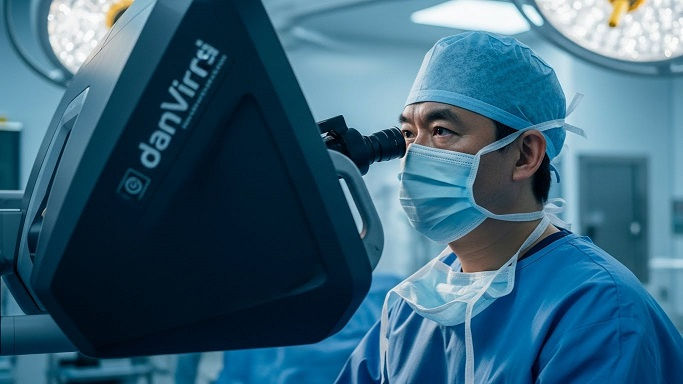
The Experience Gap: The 50 vs. 5,000 Dilemma
Robotic surgery is not automated; it is an extension of the surgeon’s skill. "Practice makes perfect" is a scientific reality in microsurgery.
Data indicates that the utilization rate of surgical robots in China is exceptionally high. On average, a single laparoscopic surgical robot in China performs significantly more surgeries annually compared to the United States (299 vs. 240 cases on average in early comparisons), indicating a highly concentrated volume of practice for Chinese surgical teams.
At the apex of this field are surgeons like Professor Xu Zhang at the Chinese PLA General Hospital. By December 2021, his team had completed a staggering 10,000 robot-assisted surgeries, making them the first in Asia and second globally to reach this milestone. When you choose a surgeon with this level of experience, you are not just paying for a procedure; you are accessing a library of muscle memory built over thousands of successful operations.
Data Speaks: Speed and Safety in Robotic Procedures
Why does volume matter? Because high-frequency repetition leads to efficiency and reduced error rates. Robotic surgery in China is defined by efficiency statistics that directly correlate to patient safety.
1. Lower Complication Rates in High-Risk Surgeries
For high-difficulty procedures, such as treating renal cancer with inferior vena cava (IVC) tumor thrombus—a surgery notoriously associated with high mortality—robotic techniques refined by high-volume Chinese centers have revolutionized outcomes.
Professor Zhang’s team, utilizing systematic robotic techniques, reduced the perioperative mortality rate for this specific high-risk surgery from a historical range of 8.3%–37.5% down to just 1%.
2. Drastically Reduced Surgery Times
Efficiency reduces the time a patient is under anesthesia, which correlates with faster recovery. At Beijing Tiantan Hospital, the adoption of domestic robotic systems for functional neurosurgery reduced the time required for deep brain lesion destruction from 3 hours to just 1 hour.
Similarly, in thoracic surgery (such as lobectomy for lung cancer), Chinese surgeons using domestic systems like the Toumai® robot have demonstrated operation times comparable to—and in some metrics faster than—mature international systems.
Beyond da Vinci: Innovation in Chinese Surgical Technology
While Chinese surgeons are masters of the da Vinci system (with over 378,000 procedures performed by 2022), the high-volume environment has also spurred domestic innovation. Robotic surgery in China is now powering a new era of 5G telesurgery.
Because the country is vast, top surgeons have pioneered remote robotic surgery to serve distant regions:
Remote Precision: Professor Zheng Ying recently completed a remote single-arm robotic surgery for a patient 2,000 kilometers away in Xizang (Tibet), with a network delay of only 40 milliseconds.
Global Reach: The Toumai® robot has successfully performed ultra-remote surgeries across continents (from Rome to Beijing) and is the first globally to be approved for commercial remote clinical use.
This infrastructure ensures that international patients seeking care in China’s major medical hubs are entering a system powered by the world’s most advanced digital surgical networks.
Navigating Robotic Surgery in China
For international patients, accessing these high-volume centers and elite surgeons can be daunting due to language and logistical barriers. This is where MedBridge steps in.
As a premier medical concierge provider, we do not provide medical services ourselves. Instead, we act as your bridge to these world-class "high volume" centers. We specialise in Medical Tourism China, handling the complexities of travel, appointments, and communication so you can focus entirely on your recovery.
Whether you require a prostatectomy, nephrectomy, or complex thoracic intervention, we ensure you are connected with surgeons who have performed your specific procedure thousands of times, not just dozens.
The Bottom Line: When it comes to your health, experience is the ultimate safety net. Do you want the surgeon who is performing their 50th operation, or their 5,000th?
[Contact MedBridgeNZ today] to discuss connecting with a top-tier specialist for your procedure.
Source Attribution
The medical data and clinical achievements cited in this article are attributed to the following experts and institutions:
Professor Xu Zhang, Chinese PLA General Hospital (Beijing).
Professor Zheng Ying, Sichuan University West China Second University Hospital.
Zhang Jianguo, Beijing Tiantan Hospital.
Professor Qingquan Luo, Shanghai Chest Hospital.


