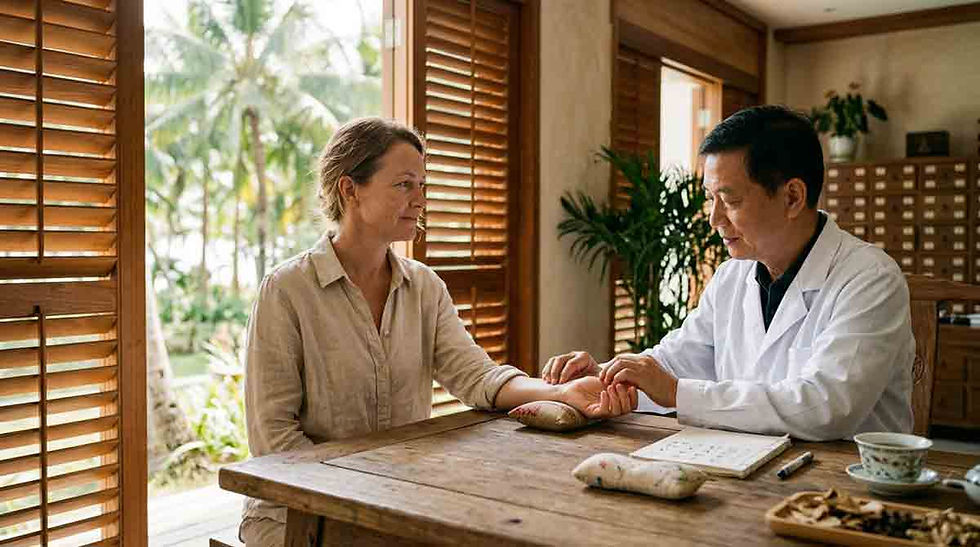
Tai Chi, Baduanjin and TCM Wellness Activities in China

Evidence last checked: 25 October 2026
You may want to try Tai Chi during your trip, learn Baduanjin, or understand a herbal bath on a wellness menu.
TCM wellness activities in China can include movement classes, yaoshan (medicinal cuisine) and herbal foot or body soaks. The choice depends on whether you want a cultural introduction, something you can keep learning, or care for a health concern. For classes, compare the teaching; for meals and baths, understand the ingredients and whether any clinical treatment is involved.

What Do You Want to Take Home from the Activity?
Your aim | What to look for | How it shapes your choice |
Explore Chinese culture | Clear explanations and a chance to watch or participate | An introductory session may be enough |
Learn movements you can continue | Step-by-step teaching, practice time, feedback and learning resources | Compare the teaching format and what you will learn |
Seek help with a health concern | An identified clinical team, assessment and a plan addressing that concern | Arrange the clinical discussion first, then clarify any class’s role |
Traditional Chinese medicine services in China include hospital consultations and TCM discussions around health checkups, as well as movement classes and cultural activities.
Tai Chi and Baduanjin: Look at How the Class Is Taught
Learning a Tai Chi Sequence
Tai Chi developed from Chinese martial arts and combines movement, posture, breathing and focused attention.[1]
A follow-along demonstration can be an enjoyable introduction. If you want to practise later on your own, look for a lesson that breaks the sequence into smaller sections, gives you time to try them and includes individual feedback. You also need to be able to follow the explanations and ask questions in the teaching language.
The class description should explain how much standing, stepping, turning and weight shifting is involved. You do not need to master a whole routine during your visit.
Getting to Know the Eight Brocades
Baduanjin, also called the Eight Brocades or Eight Pieces of Brocade, is a qigong practice commonly taught in eight parts. Tai Chi has its own forms and movement sequences; both practices use movement, breathing and attention.[1–3]
A Baduanjin lesson may cover the whole routine or selected movements. Its physical demands vary with the stance height, movement range and amount of practice.[11] A slower session with time to repeat and discuss movements serves a different purpose from simply watching the complete routine.
If you have pain, balance difficulties or restrictions after surgery, discuss the activity with your clinician and tell the instructor about any limits. Tai Chi can cause musculoskeletal aches and pain.[1]
What Research on Regular Practice Means for a Short Visit
If you are considering Tai Chi because of joint pain, it helps to know what the research actually tested.
In a 2016 randomised trial involving 204 adults with symptomatic knee osteoarthritis, participants in a structured Tai Chi programme and a physical therapy programme both reported substantial improvement in knee pain at 12 weeks. The Tai Chi group attended sessions twice weekly for 12 weeks.[4]
That trial did not test a single visitor class, and its findings cannot simply be transferred to Baduanjin. For a short visit, a useful goal is to understand some movements, receive feedback and learn how to continue afterwards. If you are seeking care for pain, arrange a clinical discussion about an appropriate plan rather than relying on a general class description.
Food Therapy: Start With the Meal and Ingredients
For a yaoshan meal, learning about the ingredients and the traditional dietary ideas behind the dish can be part of the experience. The provider should explain whether you are booking a meal, a tasting or another format.
The broth and seasonings can matter as much as the visible ingredients when allergies or dietary requirements affect your choice. If you avoid animal products, for example, a vegetable soup still needs its stock explained. Where the ingredients remain unclear, request the details or choose a dish whose contents can be explained.
If herbs are prescribed for you, keep the ingredient details and have a doctor or pharmacist review the preparation alongside your usual medicines. Herbs can alter medicine effects, and information on many combinations remains limited.[5]
If you plan to take prescribed herbs home, our guide to Chinese herbal medicine and travel explains the records to collect and the destination requirements to check.
Herbal Baths: Know the Preparation and Supervision
A foot soak, a full-body bath and a steam treatment involve different kinds of participation. The description should tell you which is offered, what ingredients are used and who prepares and supervises it.
Temperature control matters: hospital guidance warns about burns from excessively hot herbal baths. Information on herbal steaming and washing also identifies skin allergies and wounds at the treatment site as concerns.[6,7] Raise any relevant skin problems, allergies or recent wounds with the responsible team before taking part.
When a procedure is offered to treat a particular problem, clarify who will assess you and direct it.
Examples from Sanya, Sichuan and Shenzhen
These examples show how activities appear in hospital-associated centres, resorts and community programmes.
In Sanya, the official introduction to the Sanya International Friendship Sanatorium of Traditional Chinese Medicine, associated with Sanya TCM Hospital, lists Tai Chi among its studio activities, alongside a food-therapy department.[8] To turn that possibility into a visit, you need a session time, a description of participation and confirmation that individuals can join.
If you combine hospital services and resort wellness in Sanya, check who provides the consultation, accommodation and activities, and what each booking includes.
At Qing Cheng Mountain in Sichuan, Six Senses lists Tai Chi among its group and private session options.[9] For someone hoping to continue at home, the useful comparison is how much time each format leaves for practice, questions and individual feedback.
In Shenzhen, a February 2025 report on the Nanshan government website described a Baduanjin class for foreign residents at the Shekou Expats’ Morning School.[3] It illustrates community learning. Before planning around it, check whether the programme is still running and accepts short-term visitors.
For any lesson, the teaching language needs to support explanations, questions and feedback. An English webpage or a report about foreign participants does not confirm how that will work.
Turn the Booking Details into a Choice
The session details should help you make a choice. Here is how different answers can change your plan.
If you learn that… | A useful next step |
The session is mainly a demonstration | Keep it for cultural interest, or find a taught class if you want to learn movements |
You cannot follow the teaching language | Establish interpretation or choose a session where you can ask questions and understand feedback |
Booking is for groups only | Ask about an individual option or another date; keep the activity optional meanwhile |
The listed movements conflict with restrictions your clinician has given you | Discuss possible changes with the clinical team and instructor before booking |
Ingredients remain unclear and relate to an allergy or dietary restriction | Obtain the missing information or choose an alternative with clear ingredients |
A total showing the session, interpretation and any separately charged support makes two offers easier to compare.
You can send the provider—or the concierge team coordinating your visit—a short request:
I’m a beginner interested in [activity], and I hope to [watch / learn movements I can continue]. Could you confirm the teaching format, language, participation requirements and total charge for an individual session?
Before You Leave, Make the Next Lesson Easier
If you want to keep learning, note the name of the form or version you were taught and the resource your instructor suggests for reviewing it. Keep individual feedback alongside it, and get permission before recording a demonstration.
A video can help you remember the lesson, but further instruction gives you a chance to check your movements. Before leaving, find out what options exist if you decide to continue.
For a visit that includes hospital appointments, build around the confirmed dates and any clinical instructions, then add optional activities where they fit.
For a stay in Sanya, our guide to planning a TCM wellness visit brings together appointment timing, accommodation, transport and costs.
Questions About Tai Chi, Baduanjin and Wellness Activities
Is Baduanjin the same as Tai Chi?
No. Baduanjin is a qigong practice commonly taught in eight parts; Tai Chi has its own movement forms and sequences. Both involve movement, breathing and attention. Health-focused Tai Chi is also discussed as a form of qigong.[1–3]
Is one Tai Chi class worth taking if I cannot stay for a full course?
An introductory class can meet a learning or cultural-interest goal. Look for an explanation you can follow and time to participate. One class cannot be promised to reproduce results from a clinical programme involving repeated practice.
Do I need a hospital appointment to join a Tai Chi or Baduanjin class?
A general class and a clinical appointment are different arrangements. Check the provider’s joining conditions. If you want help with symptoms or have existing activity restrictions, discuss those needs with a clinician.
Is Chinese food therapy the same as prescribed herbal medicine?
Not necessarily. Check whether the offer is an ordinary meal, a cultural experience or a preparation prescribed for you. Prescribed herbs need their actual ingredient details and discussion alongside your medicines.[5]
How can I check whether a class is taught in English?
Ask about the instructor’s teaching language, whether you can ask questions and receive feedback, and whether interpretation is available. An English booking reply does not confirm how the lesson itself will work.
Adding an Activity to an Existing Hospital Visit
If you are arranging a hospital visit in China, MedBridgeNZ can enquire about optional activities and the language support they involve. We can then help fit confirmed arrangements around your appointments.[10]
Share your destination, dates and what you hope to learn or experience. MedBridgeNZ is a medical concierge provider and does not provide medical advice, diagnosis or treatment.
References
National Center for Complementary and Integrative Health. Tai Chi: What You Need To Know.
National Center for Complementary and Integrative Health. Qigong: What You Need To Know.
Nanshan Government Online. 30 attend 1st Shekou Expats’ Morning School. Updated 28 February 2025; report credited to Shenzhen Daily. Used for the Baduanjin description and a past community-class example.
Wang C, et al. Comparative Effectiveness of Tai Chi Versus Physical Therapy for Knee Osteoarthritis: A Randomized Trial. Annals of Internal Medicine. 2016;165(2):77–86. DOI: 10.7326/M15-2143.
National Center for Complementary and Integrative Health. 6 Tips: How Herbs Can Interact With Medicines.
重庆医科大学附属康复医院. 中草药浴. 6 September 2019. Chinese-language patient information; used for the temperature and burn precaution.
China Medical University Hospital, Taiwan. 中藥薰洗注意事項. 13 November 2025. Patient information on herbal steaming and washing; used for the skin-allergy and wound precautions.
三亚市中医院. 三亚国际友好中医疗养院. Official centre introduction; Chinese-language page. Used to identify listed services.
Six Senses Qing Cheng Mountain. Wellness & Spa. Official provider page; used for the listed Tai Chi session formats.
MedBridgeNZ. Services. Company coordination scope.
国家体育总局健身气功管理中心. 健身气功·八段锦“三调”要义. 杨柏龙; 5 December 2017. Used for variation in movement demands and practice load, not for disease-treatment claims.
Sources checked on 25 October 2026. The comparisons and booking examples are editorial analysis. Confirm current schedules, participation conditions and charges for your dates.